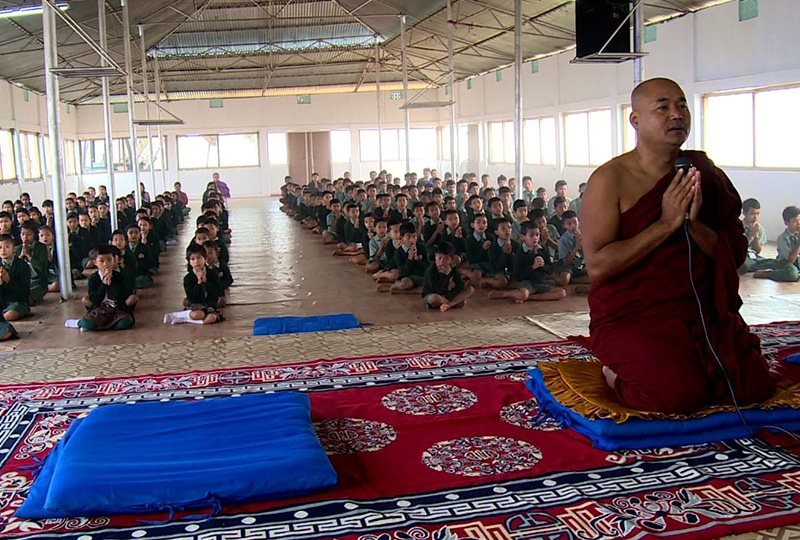
Every year, during the rainy season, Theravada monks and nuns observe Vassa, the Rains Retreat. For three months they remain in one monastery, setting aside travel to give more time to study, meditation and teaching.
In the Buddha's time, wandering monks travelled from village to village. During the monsoon, travel was difficult and could harm crops and small creatures in the fields, so the Buddha asked the Sangha to stay in one place for the rainy months. The practice continues today across South and Southeast Asia.
Vassa traditionally begins on the full moon of Āsāḷha (around July) and ends on the full moon of Assayuja (around October) with Pavāraṇā, a ceremony in which monks invite one another's feedback.
In the month after Vassa, communities gather for the Kathina ceremony, offering new robes to the monks who completed the retreat.